The Federation of International Robot-soccer Association (FIRA) is an international organisation organising competitive soccer competitions between autonomous robots. The matches are usually five-a-side. == History == In 1996 and 1997, this competition was known as MiroSot and was held in Daejeon, Korea. The 1996 competition offered a challenging arena to the younger generation and researchers working with autonomous mobile robotic systems. From 1998 through 2008, it was called the FIRA Cup, and in 2009, it became the FIRA RoboWorld Cup & Congress. The 15th RoboWorld Cup was held at Amrita Vishwa Vidyapeetham, Bangalore, India in September 2010. In 2013, it took place in Kuala Lumpur, Malaysia. The championship started on August 24, 2013, and ended on August 29. At that time, it involved five categories: Micro-Robot Soccer Tournament, Amire, Naro, Simulated Robot, Android, Robo and Humanoid Robot. It attracted teams from Singapore, Indonesia, Taiwan, India, China, South Korea, the United Kingdom, Mexico, Canada, Russia and Malaysia. 80 teams from 11 countries participated. In 2018, the competition had 277 teams participating from 12 countries. === Past Events === == FIRA RoboWorld Cup & Congress == This competition has 4 leagues: FIRA AIR, FIRA Sports, FIRA Challenges, and FIRA Youth. Each league has its own competitions, and each competition can have several events. === FIRA AIR === The FIRA AIR league has two associated competitions, Autonomous Race and Emergency Service. === FIRA Sports === The FIRA Sports league has four associated competitions, HuroCup, RoboSot, SimuroSot, and AndroSot. This the robot soccer league. HuroCup consists of single events for bipedal humanoid robots. The events are: archery, sprint, marathon, united soccer, obstacle run, long jump, spartan race, marathon, weightlifting, and basketball. There is an all-round competition for the single robot that performs the best overall. === FIRA Challenges === The FIRA Challenges league has three associated competitions, Autonomous Cars, Autonomous Cars Simulation, Innovation and Business. === FIRA Youth === The FIRA Youth league has six associated challenges, Sport Robots, HuroCup Junior, CityRacer, DRV_Explorer, Cliff Hanger, and Mission Impossible.
Realization (linguistics)
In linguistics, realization is the process by which some kind of surface representation is derived from its underlying representation; that is, the way in which some abstract object of linguistic analysis comes to be produced in actual language. Phonemes are often said to be realized by speech sounds. The different sounds that can realize a particular phoneme are called its allophones. Realization is also a subtask of natural language generation, which involves creating an actual text in a human language (English, French, etc.) from a syntactic representation. There are a number of software packages available for realization, most of which have been developed by academic research groups in NLG. The remainder of this article concerns realization of this kind. == Example == For example, the following Java code causes the simplenlg system [2] to print out the text The women do not smoke.: In this example, the computer program has specified the linguistic constituents of the sentence (verb, subject), and also linguistic features (plural subject, negated), and from this information the realiser has constructed the actual sentence. == Processing == Realisation involves three kinds of processing: Syntactic realisation: Using grammatical knowledge to choose inflections, add function words and also to decide the order of components. For example, in English the subject usually precedes the verb, and the negated form of smoke is do not smoke. Morphological realisation: Computing inflected forms, for example the plural form of woman is women (not womans). Orthographic realisation: Dealing with casing, punctuation, and formatting. For example, capitalising The because it is the first word of the sentence. The above examples are very basic, most realisers are capable of considerably more complex processing. == Systems == A number of realisers have been developed over the past 20 years. These systems differ in terms of complexity and sophistication of their processing, robustness in dealing with unusual cases, and whether they are accessed programmatically via an API or whether they take a textual representation of a syntactic structure as their input. There are also major differences in pragmatic factors such as documentation, support, licensing terms, speed and memory usage, etc. It is not possible to describe all realisers here, but a few of the emerging areas are: Simplenlg [3]: a document realizing engine with an api which intended to be simple to learn and use, focused on limiting scope to only finding the surface area of a document. KPML [4]: this is the oldest realiser, which has been under development under different guises since the 1980s. It comes with grammars for ten different languages. FUF/SURGE [5]: a realiser which was widely used in the 1990s, and is still used in some projects today OpenCCG [6]: an open-source realiser which has a number of nice features, such as the ability to use statistical language models to make realisation decisions.
Breakup Notifier
Breakup Notifier was a web application written by product developer and programmer Dan Loewenherz that enabled its registered users to track the relationship status of their Facebook friends. An email notification was sent to the user when one of their Facebook friends changed their relationship status. The app was one of the most viral Facebook app's at the time of its release. It was mentioned in a skit on The Jay Leno Show and news of its popularity was published in Time magazine, The New York Post, CNET, and The Globe and Mail. == Popularity and Facebook controversy == Breakup Notifier gathered 100,000 users in less than 24 hours of its launch and reached a user base of more than 3,000,000 in February 2011. Facebook then blocked the app. Loewenherz later created an app named Crush Notifier, which differs from the original app in that users can check if they have a mutual crush. Breakup Notifier was later unblocked by Facebook and monetized.
Figure AI
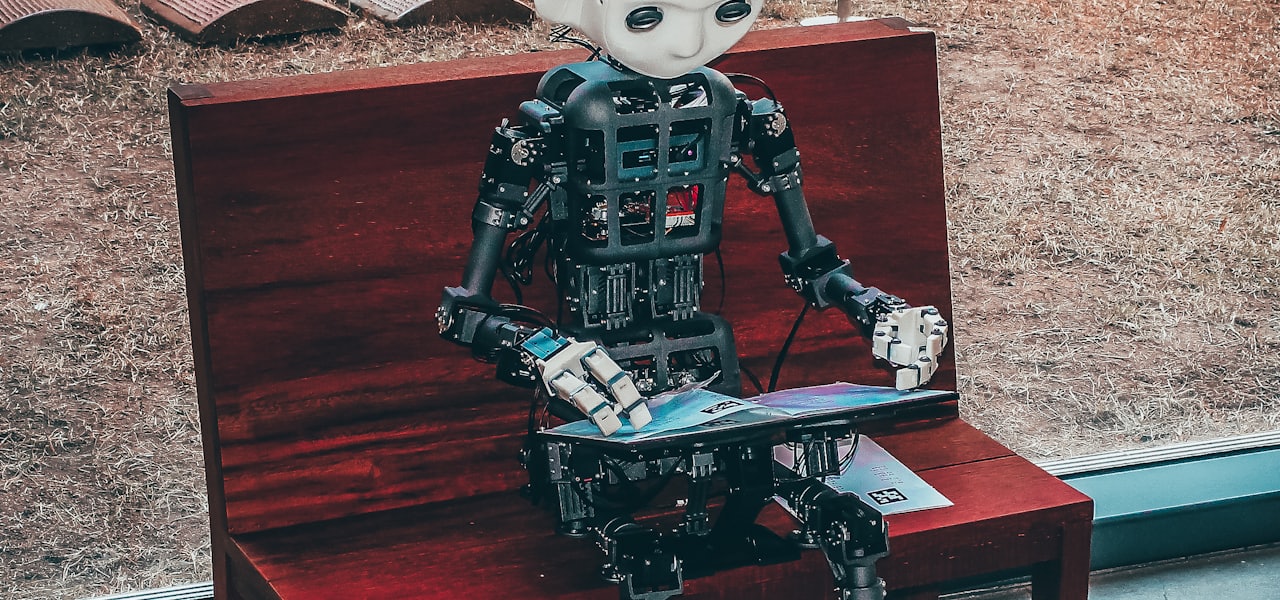
Figure AI, Inc. is an American robotics company developing humanoid robots that operate via artificial intelligence. The company was founded in 2022 by Brett Adcock. As of late 2025, the company has a $39 billion valuation. Three generations of humanoid robots (Figure 01–03) have been developed, as well as two iterations of a vision-language-action model (Helix 01–02), which can control up to two robots at once. By 2026, the robots demonstrated the potential ability to perform household work and the company gained publicity when a Figure 03 appeared at a White House event. == History == Figure AI was founded in 2022 by Brett Adcock, also known for founding Archer Aviation and Vettery. That year, the company introduced its prototype, Figure 01, a bipedal robot designed for manual labor, initially targeting the logistics and warehousing sectors. The initial model utilized external cabling for easier maintenance. In May 2023, Figure AI raised $70 million from investors including Adcock, who invested $20 million, and Parkway Venture Capital. In January 2024, Figure AI announced a partnership with BMW to deploy humanoid robots in automotive manufacturing facilities. In February 2024, Figure AI secured $675 million in venture capital funding from a consortium that includes Jeff Bezos, Microsoft, Nvidia, Intel, and the startup-funding divisions of Amazon and OpenAI; the company was then valued at $2.6 billion. Figure AI also announced a partnership with OpenAI, which would build specialized artificial intelligence (AI) models for Figure AI's humanoid robots, enabling its robots to process language; the collaboration ended after a year, with Adcock stating that large language models had become a smaller problem compared to those allowing for "high rate robot control". In August 2024, the company introduced Figure 02, describing it as the next step toward deploying humanoids for industrial use. The machine has 35 degrees of freedom (DOF), while the five-fingered hands have 16 DOF and the ability to carry up to 25 kilograms (55 lb). The model is equipped with cabling integrated into the limbs, a torso-placed battery, six RGB cameras, and an onboard vision-language-action (VLA) model. It has three times the computing power (including inference AI) of the previous model, including two graphics processing units, supported by Nvidia. Microphones, speakers, and custom AI models (developed with OpenAI) enable communication with humans. In early 2025, Figure AI announced BotQ, a manufacturing facility aiming to produce 12,000 humanoids per year with the help of its own humanoid robots, and Helix, a VLA model that can control up to two robots at once. Helix enables a robot to interact with the world without extensive manual training, according to the company allowing it to pick up nearly any small household object. By April, the company issued cease-and-desist letters to at least two secondary brokers promoting its private stock without authorization. In September, a third round of financing exceeded $1 billion, raising the company's total valuation to $39 billion. Investors included Brookfield Asset Management, Intel, Macquarie Capital, Nvidia, Parkway Venture Capital, Qualcomm, Salesforce, and T-Mobile. In October 2025, Figure 03 was introduced. According to the company, its hardware and software redesign aims to create a general-purpose robot able to learn directly from humans. An upgraded camera system delivers twice the frame rate, a quarter the latency, and a 60% wider field of view, in addition to a camera in each hand. Tactile sensors in the fingertips can detect forces as little as 3 grams (0.1 oz). It incorporates soft materials and a protected battery for safety, and removable, washable textiles. It supports wireless inductive charging. In November 2025, the former head of product safety sued the company on the basis of being fired for raising the concern that the company's robots were strong enough to fracture a human skull. By early 2026, Figure 02 had been used in demonstrations showing that it could load a washing machine, sort packages, and fold laundry. That January, Helix 02 was released, expanding the AI model to the entire body to allow for functional autonomy. A Helix 02–powered Figure 02 was shown to be capable of loading and unloading a dishwasher, based on hours of motion-capture data and simulation-based machine learning. In March, U.S. First Lady Melania Trump appeared at the White House with a Figure 03, promoting the presumptive eventual ability of AI to teach children. In May 2026, Figure AI livestreamed a group of their robots processing packages nonstop for almost a week, inspiring a 10-hour competition between their robot and a human, in which the robot performed 98.5% as well as the human.
Luma (video)
In video, luma ( Y ′ {\displaystyle Y'} ) represents the brightness in an image (the "black-and-white" or achromatic portion of the image). Luma is typically paired with chroma. Luma represents the achromatic image, while the chroma components represent the color information. Converting R′G′B′ sources (such as the output of a three-CCD camera) into luma and chroma allows for chroma subsampling: because human vision has finer spatial sensitivity to luminance ("black and white") differences than chromatic differences, video systems can store and transmit chromatic information at lower resolution, optimizing perceived detail at a particular bandwidth. == Luma versus relative luminance == Luma is the weighted sum of gamma-compressed R′G′B′ components of a color video—the prime symbols ′ denote gamma compression. The word was proposed to prevent confusion between luma as implemented in video engineering and relative luminance as used in color science (i.e. as defined by CIE). Relative luminance is formed as a weighted sum of linear RGB components, not gamma-compressed ones. Even so, luma is sometimes erroneously called luminance. SMPTE EG 28 recommends the symbol Y ′ {\displaystyle Y'} to denote luma and the symbol Y {\displaystyle Y} to denote relative luminance. === Use of relative luminance === While luma is more often encountered, relative luminance is sometimes used in video engineering when referring to the brightness of a monitor. The formula used to calculate relative luminance uses coefficients based on the CIE color matching functions and the relevant standard chromaticities of red, green, and blue (e.g., the original NTSC primaries, SMPTE C, or Rec. 709). For the Rec. 709 (and sRGB) primaries, the linear combination, based on pure colorimetric considerations and the definition of relative luminance is: Y = 0.2126 R + 0.7152 G + 0.0722 B {\displaystyle Y=0.2126R+0.7152G+0.0722B} The formula used to calculate luma in the Rec. 709 spec arbitrarily also uses these same coefficients, but with gamma-compressed components: Y ′ = 0.2126 R ′ + 0.7152 G ′ + 0.0722 B ′ , {\displaystyle Y'=0.2126R'+0.7152G'+0.0722B',} where the prime symbol ′ denotes gamma compression. == Rec. 601 luma versus Rec. 709 luma coefficients == For digital formats following CCIR 601 (i.e. most digital standard definition formats), luma is calculated with this formula: Y 601 ′ = 0.299 R ′ + 0.587 G ′ + 0.114 B ′ {\displaystyle Y'_{\text{601}}=0.299R'+0.587G'+0.114B'} Formats following ITU-R Recommendation BT. 709 (i.e. most digital high definition formats) use a different formula: Y 709 ′ = 0.2126 R ′ + 0.7152 G ′ + 0.0722 B ′ {\displaystyle Y'_{\text{709}}=0.2126R'+0.7152G'+0.0722B'} Modern HDTV systems use the 709 coefficients, while transitional 1035i HDTV (MUSE) formats may use the SMPTE 240M coefficients: Y 240 ′ = 0.212 R ′ + 0.701 G ′ + 0.087 B ′ = Y 145 ′ {\displaystyle Y'_{\text{240}}=0.212R'+0.701G'+0.087B'=Y'_{\text{145}}} These coefficients correspond to the SMPTE RP 145 primaries (also known as "SMPTE C") in use at the time the standard was created. The change in the luma coefficients is to provide the "theoretically correct" coefficients that reflect the corresponding standard chromaticities ('colors') of the primaries red, green, and blue. However, there is some controversy regarding this decision. The difference in luma coefficients requires that component signals must be converted between Rec. 601 and Rec. 709 to provide accurate colors. In consumer equipment, the matrix required to perform this conversion may be omitted (to reduce cost), resulting in inaccurate color. == Luma and luminance errors == As well, the Rec. 709 luma coefficients may not necessarily provide better performance. Because of the difference between luma and relative luminance, luma does not exactly represent the luminance in an image. As a result, errors in chroma can affect luminance. Luma alone does not perfectly represent luminance; accurate luminance requires both accurate luma and chroma. Hence, errors in chroma "bleed" into the luminance of an image. Note the bleeding in lightness near the borders. Due to the widespread usage of chroma subsampling, errors in chroma typically occur when it is lowered in resolution/bandwidth. This lowered bandwidth, coupled with high frequency chroma components, can cause visible errors in luminance. An example of a high frequency chroma component would be the line between the green and magenta bars of the SMPTE color bars test pattern. Error in luminance can be seen as a dark band that occurs in this area.
Human–AI interaction
Human–AI interaction is a developing field of research and a sub-field of human–computer interaction (HCI). HCI is a field of research that explores the interactions between humans and computer-based technology, focusing on design implementation, user experience, and psychological factors. With the proliferation of artificial intelligence (AI), there has developed a sub-section of HCI research dedicated specifically to artificial intelligence and how people interact with and are impacted by it. This is human–AI interaction, abbreviated either as HAX or HAII. == Introduction == Artificial intelligence (AI), in general, has fluid definitions and varied research applications, but in brief can be applied to mechanizing tasks that would require human intelligence to complete. AI are tools designed to replicate the human abilities of navigating uncertainty, active learning, and processing information in different contexts. Within the context of HCI and HAX research, artificial intelligence can be broken into two sub-fields, natural language processing (NLP) and computer vision (CV). AI technologies notably include machine-learning, deep-learning and neural networks, and large-language models (LLMs). As a new and rapidly developing technology, AI is changing how computers work and therefore changing how humans interact with computers. Unlike the traditional human-computer interaction, where a human directs a machine, human-AI interaction is characterized by a more collaborative relationship between the computer program (the AI) and the human user, as AI is perceived as an active agent rather than a tool. This changing dynamic creates new questions and necessitates new research methods that are not present in traditional HCI research. According to a scoping review on the state of the discipline, the HAX field comprises research on the "design, development, and evaluation of AI systems" and encompasses the themes of human-AI collaboration, human-AI competition, human-AI conflict, and human-AI symbiosis. == Design == Machine learning and artificial intelligence have been used for decades in targeted advertising and to recommend content in social media. Ethical Guidelines (Framework for ethical AI development) == User Experience (UX) == This section should handle research on how users interact with tools. What techniques do they use, do they develop habits, what types of programs and devices are they using to access these tools, what do they use these tools to do exactly. === Cognitive Frameworks in AI Tool Users === AI has been viewed with various expectations, attributions, and often misconceptions. Many people exclusively understand AI as the LLM chatbots they interact with, like ChatGPT or Claude, or other generative AI programs. [Insert section: discuss how people interact with these specific AI tools as a connection to the following paragraphs] Most fundamentally, humans have a mental model of understanding AI's reasoning and motivation for its decision recommendations, and building a holistic and precise mental model of AI helps people create prompts to receive more valuable responses from AI. However, these mental models are not whole because people can only gain more information about AI through their limited interaction with it; more interaction with AI builds a better mental model that a person may build to produce better prompt outcomes. Research on human-AI interaction has emphasized that users develop mental models of AI systems and revise those models through repeated use, feedback, and explanation, while design research has stressed the importance of communicating capabilities and limitations early and supporting trust calibration through explanation and correction. In a 2025 SSRN working paper, John DeVadoss proposed "Hypothetico-Deductive Interaction" (HDI), a framework that describes human-AI interaction as a mutual process of conjecture and refutation in which users test assumptions about an AI system's capabilities while the system infers and updates assumptions about user goals through its responses and clarifying questions. DeVadoss argued that this framing helps explain prompt iteration, weak capability awareness, and trust miscalibration, and suggested design responses such as clearer communication of uncertainty, easier correction, actionable explanations, and safer failure modes. == Research themes == === Human-AI collaboration === Human-AI collaboration occurs when the human and AI supervise the task on the same level and extent to achieve the same goal. Some collaboration occurs in the form of augmenting human capability. AI may help human ability in analysis and decision-making through providing and weighing a volume of information, and learning to defer to the human decision when it recognizes its unreliability. It is especially beneficial when the human can detect a task that AI can be trusted to make few errors so that there is not a lot of excessive checking process required on the human's end. Some findings show signs of human-AI augmentation, or human–AI symbiosis, in which AI enhances human ability in a way that co-working on a task with AI produces better outcomes than a human working alone. For example: the quality and speed of customer service tasks increase when a human agent collaborates with AI, training on specific models allows AI to improve diagnoses in clinical settings, and AI with human-intervention can improve creativity of artwork while fully AI-generated haikus were rated negatively. Human-AI synergy, a concept in which human-AI collaboration would produce more optimal outcomes than either human or AI working alone could explain why AI does not always help with performance. Some AI features and development may accelerate human-AI synergy, while others may stagnate it. For example, when AI updates for better performance, it sometimes worsens the team performance with human and AI by reducing the compatibility with the new model and the mental model a user has developed on the previous version. Research has found that AI often supports human capabilities in the form of human-AI augmentation and not human-AI synergy, potentially because people rely too much on AI and stop thinking on their own. Prompting people to actively engage in analysis and think when to follow AI recommendations reduces their over-reliance, especially for individuals with higher need for cognition. === Human-AI competition === Robots and computers have substituted routine tasks historically completed by humans, but agentic AI has made it possible to also replace cognitive tasks including taking phone calls for appointments and driving a car. At the point of 2016, research has estimated that 45% of paid activities could be replaced by AI by 2030. Perceived autonomy of robots is known to increase people's negative attitude toward them, and worry about the technology taking over leads people to reject it. There has been a consistent tendency of algorithm aversion in which people prefer human advice over AI advice. However, people are not always able to tell apart tasks completed by AI or other humans. See AI takeover for more information. It is also notable that this sentiment is more prominent in the Western cultures as Westerners tend to show less positive views about AI compared to East Asians. == Research on the psychological impacts of AI == === Perception on others who use AI === As much as people perceive and make judgment about AI itself, they also form impressions of themselves and others who use AI. In the workplace, employees who disclose the use of AI in their tasks are more likely to receive feedback that they are not as hardworking as those who are in the same job who receive non-AI help to complete the same tasks. AI use disclosure diminishes the perceived legitimacy in the employee's task and decision making which ultimately leads observers to distrust people who use AI. Although these negative effects of AI use disclosure are weakened by the observers who use AI frequently themselves, the effect is still not attenuated by the observers' positive attitude towards AI. === Bias, AI, and human === Although AI provides a wide range of information and suggestions to its users, AI itself is not free of biases and stereotypes, and it does not always help people reduce their cognitive errors and biases. People are prone to such errors by failing to see other potential ideas and cases that are not listed by AI responses and committing to a decision suggested by AI that directly contradicts the correct information and directions that they are already aware of. Gender bias is also reflected as the female gendering of AI technologies which conceptualizes females as a helpful assistant. == Emotional connection with AI == Human-AI interaction has been theorized in the context of interpersonal relationships mainly in social psychology, communications and media studies, and as a technology interface through the lens of hu
PhotoLine
PhotoLine is a general purpose bitmap and vector graphics editor developed and published by Computerinsel GmbH for Windows, macOS, and Linux/Wine. It was originally created in 1995 by Gerhard Huber and Martin Huber. The program combines bitmap and vector graphics editing in one seamless working application unlike most graphics software which tend to focus on either bitmap or vector editing and output. PhotoLine is considered as a market competitor to Adobe Photoshop. == Features == PhotoLine edits and composes multi-layer raster and vector images with deep support for masking and alpha compositing and with full color management. Editing and color management in PhotoLine is mostly non-destructive. Image data in layers is preserved without loss of information regardless of the document's image mode or layer transformation. color depth, image resolution, color model, and ICC profile are preserved for each individual layer or group of layers. Layers can be cloned and reused anywhere in the layer stack, including repurposed as layer masks. Layer blending and compositing in PhotoLine supports common blend modes, and features a layer blend range of -200 to +200 percent. It is also possible to control which channels are blended for each layer, adjustment layer, and layer mask or group of layers. Filters, adjustment layers, and brushes have access to Lab and HIS color modes (HIS is a variant of HSL), separately of the color model of the underlying image layer. In Addition to raster and vector editing, PhotoLine can be used for small desktop publishing projects. Multi-page documents with page spreads and text flow between text frames and pages are supported. Character and paragraph styles can be defined. Spot colors, bleed settings, a baseline grid, a table of contents generator, and PDF/X support help with these projects. PhotoLine is however much more limited when compared to dedicated publishing software such as Adobe InDesign or QuarkXPress. PhotoLine incorporates the Open-source software library LibRaw to read raw images from digital cameras for import. Developing these files is non-destructive with a choice of embedding the RAW image data either in the PhotoLine document or link to the external RAW image file. PhotoLine can open raw files as linear unmodified and non color managed source images. Photoshop PSD files can be imported and exported. Core functionality of PhotoLine can be extended through standard Photoshop filter plugins, the G'MIC digital image processing framework, and PSP tubes. External programs can be linked for a seamless round-trip workflow and files can be sent directly for processing in third-party design applications. Custom functionality is further supported through scripting and macro recording. == Early history == Developed by two brothers, Gerhard Huber and Martin Huber, PhotoLine was first released in January 1996 on the Atari ST line of personal computers from Atari Corporation. Previously, Gerhard and Martin had worked on making graphics cards for Atari computers and writing drivers for image scanners. Atari's market share was declining, and the brothers considered developing a video game to expand the business. This led them to search for image editing software that would run on Atari computers and fit their game project. Only an image editor called tms Cranach came close to what Gerhard and Martin had in mind. tms Cranach was a Raster graphics editor running on Atari's MegaST/STe, TT030, and Falcon030 systems. However, Cranach turned out to be expensive software and complicated to use. The brothers contacted tms (Cranach's developers) and this resulted in an offer from tms to purchase Cranach and its source code, as tms intended to exit the Atari software market. After the purchase of Cranach and its source code Gerhard and Martin initially continued to sell Cranach, but sales were low. In 1995 the two decided to start developing a new graphics editor called "PhotoLine". PhotoLine was developed from scratch and written in C++. It nevertheless contained a lot of know-how from Cranach (which was written in C). PhotoLine first release was launched one year later in 1996. With the growing popularity of Microsoft Windows, the release of Windows 95, and the limiting graphics hardware on the Atari platforms, the developers switched development platforms and continued development of PhotoLine for Windows only. The first Windows version (PhotoLine 2.2) was released in the middle of 1997. Shortly after, the Atari version was discontinued and saw its final release as PhotoLine 2.30. The Huber brothers released this final Atari version into the public domain in 2012. The first Classic Mac OS version of PhotoLine 6 appeared in 1999 after many ex-Atari users who had switched to Mac OS pressured the PhotoLine developers to release an Apple port. == Linux Support == PhotoLine runs natively under Windows and MacOS. While a native Linux version of PhotoLine is not available, running PhotoLine under Wine is actively supported and maintained by the developers. Running PhotoLine under Linux/Wine PhotoLine enables the user to allow Little CMS to fully support color management under Linux instead of the native OS CMS. == File format == Native PhotoLine files have the extension .PLD, which is an abbreviation of "PhotoLine Document". It can contain embedded JPEG, PNG, or camera raw images. It contains a preview image in JPEG or PNG format, which is used by the operating system or third-party applications to display a thumbnail of its contents. Thumbnails are natively supported on MacOS X. During installation on Windows the user is presented with an option to install a PLD thumbnail preview driver which enables thumbnails of PLD content in Windows Explorer. Alternatively, the FastPictureViewer Standalone Codec Pack provides the ability to display PLD thumbnails in Windows Explorer. == Version History == PhotoLine was first developed for the Atari ST computer. Version 2 was the first version for Windows, and since version 6 PhotoLine is also available for MacOS.